Microsoft is expanding Advanced Shader Delivery (ASD) across more Windows 11 gaming PCs in October 2026. The idea is straightforward: instead of making your CPU compile a large set of game shaders locally at first launch or during play, supported games can receive precompiled shaders matched to the hardware and driver environment.
For PC gamers, however, owning a supported GPU is only one part of the requirement. The Windows version, graphics driver, individual game and delivery storefront all matter.
That is why “my GPU supports ASD” and “this game is actually using ASD on my PC” are not the same statement.
What Advanced Shader Delivery actually does
Microsoft says ASD addresses two common PC gaming problems: long first-launch shader compilation waits and stutter caused by shaders being compiled at runtime.
The system allows developers to provide shader-state information that can be compiled ahead of time for different GPU and driver combinations. The resulting precompiled shader database can then be delivered with the game so Windows and the graphics driver have more of the required shader work ready before play begins.
Microsoft describes this as part of its DirectX/Windows infrastructure rather than a feature tied permanently to one GPU vendor.
Which Windows version is required?
Microsoft’s October 2026 requirements specify Windows 11 version 24H2 or newer.
That means a compatible GPU by itself is not enough if the system is still on Windows 10 or an older Windows 11 release.
Which GPUs support Advanced Shader Delivery?
Microsoft’s current October guidance separates hardware that is already supported from hardware scheduled to join later in the month.
AMD: available now
Microsoft lists the following AMD Radeon architecture families:
- RDNA 1
- RDNA 2
- RDNA 3
- RDNA 3.5
- RDNA 4
The listed minimum driver is AMD Software: Adrenalin Edition 26.6.1 or newer.
Qualcomm: available on Snapdragon X2
Microsoft lists Qualcomm Snapdragon X2 Series hardware with driver 2026.08.3 or newer.
The current Microsoft list does not simply say “all Snapdragon X PCs,” so first-generation Snapdragon X owners should not assume support from the family name alone.
NVIDIA: later in October
Microsoft says ASD will expand later in October to all RTX GPUs and RTX Spark.
That wording is unusually broad and includes older RTX generations in Microsoft’s stated hardware scope. But as of this article’s preparation, Microsoft has not published the final required NVIDIA driver version or a more precise activation date.
So an RTX card being on the future-supported list does not mean ASD is already active on that PC today.
Intel: later in October
Microsoft lists the following Intel hardware for the later-October expansion:
- Intel Arc B570
- Intel Arc B580
- Intel Core Ultra Series 2 with supported integrated Arc graphics
- Intel Core Ultra Series 3 with supported integrated Arc graphics
Microsoft does not list Arc A-Series/Alchemist desktop cards in this October compatibility group.
The final Intel ASD driver version is also not published in the October announcement yet.
Which games actually support ASD?
Hardware support does not automatically make every DirectX 12 game an ASD game.
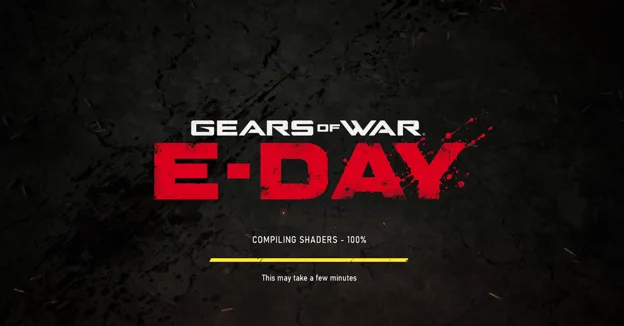
Microsoft says Gears of War: E-Day is the first game to showcase Advanced Shader Delivery across the expanded Windows hardware ecosystem.
It has also confirmed Call of Duty: Modern Warfare 4 as a future ASD-supported title, with additional games planned later.
Developers need to integrate the required shader-data workflow and provide the state-object data used to produce precompiled shader databases. A game that has not done that work does not become ASD-enabled merely because the PC has a supported GPU.
Does Advanced Shader Delivery work on Steam?
This is one of the most important distinctions in Microsoft’s documentation.
Microsoft’s Agility SDK documentation says the game-installer registration APIs used for precompiled shader databases are currently supported by the Xbox PC app. Microsoft designed the Windows and DirectX infrastructure so other game storefronts can adopt it in the future, but that future capability should not be confused with universal storefront support today.
For Gears of War: E-Day, Microsoft’s October instructions specifically tell players to install the Xbox PC app before downloading if they want to experience ASD.
The safe rule is therefore: do not assume the Steam, Epic Games Store or another storefront version of a game receives Microsoft’s ASD pipeline unless that store or the game’s publisher explicitly confirms it.
What about Xbox Gaming Services?
Microsoft’s earlier general-availability documentation for ASD on AMD PCs lists Xbox Gaming Services 37.113.11003.0 or newer as part of the device requirements and tells users to update Gaming Services through the Microsoft Store.
The October expansion post focuses on the broader GPU rollout and tells Gears E-Day players to install the Xbox PC app and keep graphics drivers current.
If ASD is not appearing on a supported configuration, checking Windows Update, the Xbox PC app, Microsoft Store Gaming Services and the graphics driver is therefore more useful than looking only at the GPU model.
How do you know ASD is actually working?
Microsoft gives players a simple visible signal for supported titles:
“Precompiled shaders installed” should appear in the game’s launch window when Advanced Shader Delivery is working.
If that message is absent, do not assume the system is receiving the precompiled shader package just because the hardware appears on Microsoft’s compatibility list.
What does Microsoft’s 95% claim mean?
Microsoft says Advanced Shader Delivery reduces shader compilation time in Gears of War: E-Day by approximately 95%, taking first-launch shader compilation from several minutes on a typical PC without ASD to just a few seconds with ASD.
That is a claim about shader compilation time for this implementation.
It is not a 95% FPS increase, a 95% reduction in total game loading time, or a guarantee that every hitch in every supported game disappears.
ASD specifically targets shader compilation work. A game can still stutter for other reasons including asset streaming, CPU bottlenecks, storage behavior, background tasks, driver bugs or general engine issues.
Does updating your graphics driver break the shader package?
Shader binaries can depend on the graphics driver, which is one reason Microsoft’s system is more involved than downloading one permanent cache file.
Microsoft says its ASD architecture can update the precompiled shader data when a graphics driver changes, allowing the delivered cache to stay aligned with the current driver environment.
That also explains why final NVIDIA and Intel driver requirements matter. Their hardware may be listed for October support, but the correct supporting driver still needs to ship.
Advanced Shader Delivery vs a normal shader cache
Normal graphics drivers already use shader caching, and some stores or games have their own shader-compilation strategies.
ASD is different because Microsoft is standardizing a workflow where shader-state data can be collected by developers, compiled ahead of time for target hardware and then registered with Windows as a precompiled shader database.
The long-term goal is broader than the Xbox PC app. Microsoft has published tools and APIs that other storefronts can implement. But IGZ will treat each storefront as unsupported until there is first-party evidence that its ASD delivery path is actually live.
What should you check before expecting ASD?
- Windows 11 24H2 or newer
- a GPU currently supported by Microsoft’s ASD matrix
- the required vendor driver, when one is published
- a game that explicitly supports Advanced Shader Delivery
- the supported delivery/storefront path for that game
- current Xbox PC app and Gaming Services components where Microsoft’s instructions require them
- the “Precompiled shaders installed” confirmation in the supported game’s launch flow
What IGZ will recheck
This is a natural tracker topic because several parts of the compatibility matrix are still moving.
IGZ will recheck when Microsoft or the GPU vendors publish the final NVIDIA and Intel ASD driver requirements, when Intel/NVIDIA support actually activates, when more games are added, and when another major PC storefront publicly implements Microsoft’s ASD delivery path.
The key takeaway is simple: Advanced Shader Delivery is not just a GPU feature. The operating system, driver, game integration and storefront delivery path all have to line up before a player receives the precompiled shaders.
Sources
- Microsoft DirectX: Advanced Shader Delivery Available for Gears of War: E-Day and Coming Soon across Windows 11
- Microsoft DirectX: Advanced Shader Delivery Expands Public Preview with AMD
- Microsoft DirectX: Agility SDK 1.618 and Advanced Shader Delivery
- Microsoft DirectX: Advanced Shader Delivery at GDC 2026
- NVIDIA Developer: RTX Innovations and Advanced Shader Delivery
- Intel: Microsoft Collaboration and Advanced Shader Delivery